NASR-M board bring-up, USB adventures II
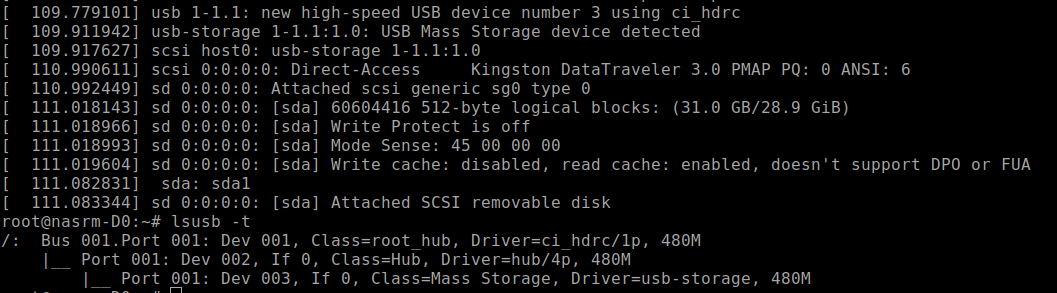
USB finally works. Now I’m able to connect an external USB hub to the socket and plug in thumb drives and USB hard disks. All works fine, except the USB-to-SATA converter, which is not soldered in yet. I saved that for the dessert, because I have other priorities.
This is the ‘lsusb -t’ picture of a thumb drive plugged into the USB socket.
NASR-M board bring-up, USB adventures
It’s USB show time! Xilinx documents suggest the USB3320 as a good USB PHY that works, and I’ve seen multiple development boards that use that chip. If it works for them, it will probably work for me, I thought. Despite being defined in Vivado hardware design, USB was not detected by the Linux kernel. Looking closely, I saw that a reference clock was ok, but there was no signal on the CLKOUT pin.
Petalinux Zynq configuration order
This is a short reminder to myself on how to configure the Petalinux for Zynq 7000.
First, source the settings.sh from the Petalinux root folder.
source ./settings.sh
Create the project from Vivado hardware definintion export. It's a good idea to provide a complete path to the xsa file.
    petalinux-create project --template zynq --name nasrm-usb
    cd nasrm-usb
    petalinux-config --get-hw-description /data2/hw/nasrm/usb_wrapper.xsa
This will present a configuration screen. Don't forget to set the serial devices for boot messages and terminal access.
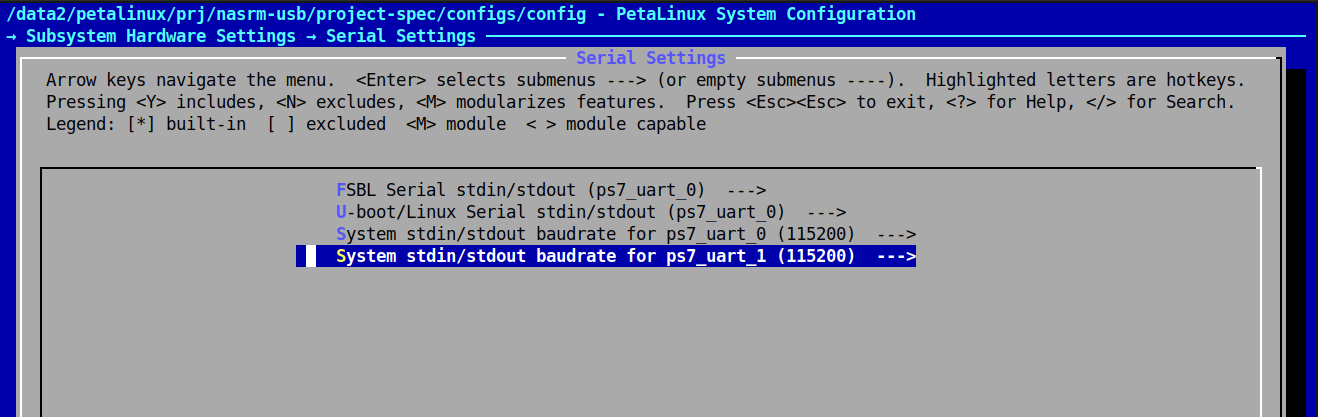
Then, configure the kernel with all of the necessary modules. Basically it's a good old linux menuconfig.
petalinux-config -c kernel
If the tinfo5 library is not found in ubuntu 24, you may symlink it somewhere or download from ubuntu 22:
    sudo apt update
    wget http://security.ubuntu.com/ubuntu/pool/universe/n/ncurses/libtinfo5_6.3-2ubuntu0.1_amd64.deb
    sudo apt install ./libtinfo5_6.3-2ubuntu0.1_amd64.deb
Tascam US-4x4HR linux config utility
A while ago I was trying to bring up the sound card Tascam US-4x4HR on a linux server. Linux usb sound module was functional, but the card was mixing the inputs, and I didn't wanted that. After hours of searching through the Internet, I haven't found anything usable, and resorted to "sniffing" the usb control transfers of the official windows utility, and reproducing them with libusb on linux. Surprisingly, it worked well. Here is the link to the potascam github repo. Quick and dirty, as usual.
Tags: linux, sound, tascam, potascam
Qt5 cross-compilation environment for Raspberry Pi
This post is a brief extract of a wonderfully detailed video made by Ulas Dikme. Many thanks to Ulas for sharing his experiences, it saved me several days of work setting up the cross-compilation environment.
Ulas was using an Ubuntu 20 Virtual Box machine for building a sysroot and qt base. While it's not the best solution performance-wise, it's certainly very convenient in terms of being portable across the host machines. My Qt5 build system resides on a USB hard drive.